






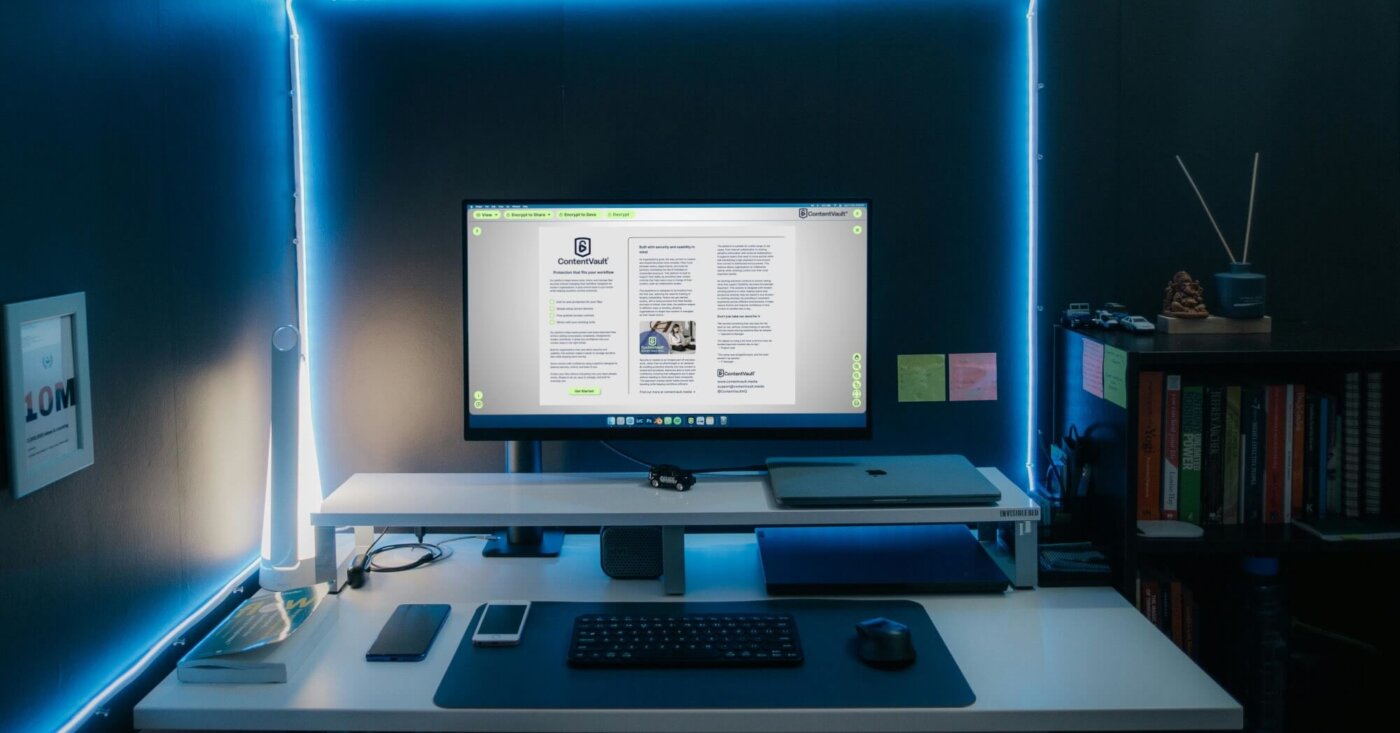
Content Vault, the patent-pending content security platform originally developed for the film, television and entertainment industries, has today announced a major update to its application, extending its unique device-specific encryption technology to PDF documents – one of the most widely used file formats across media, legal, financial and professional services sectors.
Content Vault provides content creators and organisations full control over who can access files by using device-specific AES-256 bit encryption to safeguard valuable media and documents against disclosures, theft and unauthorised access. Files are encrypted to a specific user and device, ensuring that if content is intercepted, copied or shared beyond its intended recipient, it remains inaccessible without the correct device and Content Vault application.
Content Vault was created in response to its founders’ direct experience with the security failures of traditional file‑sharing workflows, causing significant commercial and reputational damage to organisations. Drawing on their background in high‑profile media production, the team developed the platform to address this growing threat, by encrypting files directly to a specific device and preventing full decryption until explicit permission is granted.
The latest update of Content Vault now provides protection to PDF documents, enabling secure sharing of contracts, scripts, financial documents, reports and other sensitive materials commonly shared across media production and professional services.
“PDFs are critical to how organisations operate, from contracts and scripts to legal and financial documents,” said Paula Miller, co-founder of Content Vault. “By extending our device-specific encryption to PDFs, we’re enabling teams across media and professional services the ability to protect sensitive files with the same level of security we already provide for video, audio and images.”
“Content Vault was born out of real-world frustration,” added Simon Ingram, co-founder of Content Vault. “We’ve worked in environments where a single leak can cost millions. Our goal was to build a platform that allows content owners to retain control of their files from the moment they leave their hands – and that now extends beyond media into documents that underpin every production and business workflow.”
To use the platform, recipients install the Content Vault application and share their unique device-specific Content Vault Key (.cvk) with senders. Files (video, audio, images and PDFs) are encrypted for that user and device, transferable by any method, but can only be opened in the Content Vault app on the authorised device.
The latest version of Content Vault is available now on Windows and MacOS and integrates with existing workflows and cloud platforms, giving studios, agencies and organisations a secure, user-specific way to share and store sensitive files.