

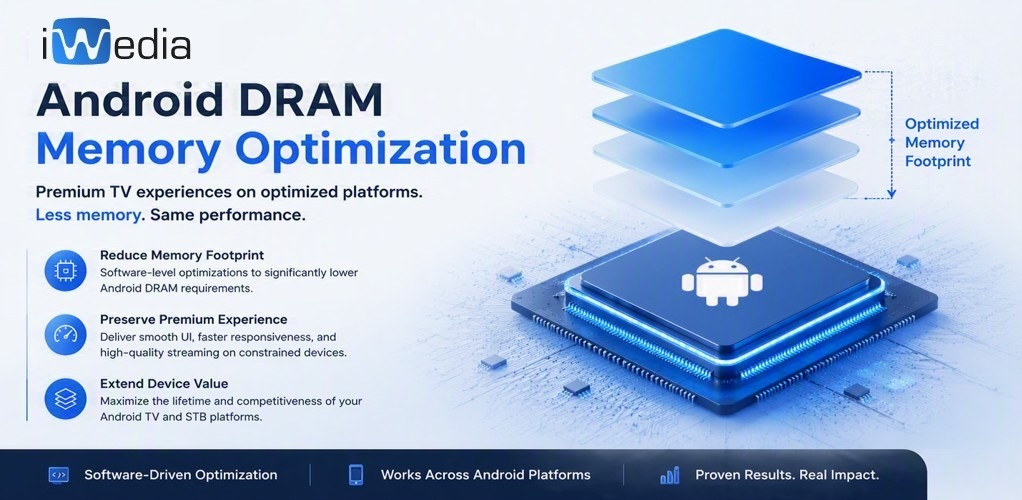
Helping SoC vendors and device manufactuters reduce software requirements, protect hardware costs, and extend Android platform lifecycles
iWedia, a global leader in connected TV software solutions, will present its software-first approach to DRAM optimization at Android TV APAC Summit 2026 in Bangkok, November 17–19. Working with SoC vendors, TV manufacturers, and set-top box providers, iWedia helps reduce Android memory requirements, protect hardware cost targets, and extend the commercial life of existing platforms.
For device manufacturers, memory has become a critical product and lifecycle decision. Increasing DRAM capacity raises the bill of materials (BOM) and can affect the competitive price positioning of a TV or set-top box. Redesigning hardware introduces additonal validation costs and can delay product launches. At the same time, growing Android memory requirements put pressure on existing platforms, potentially shortening their commercial lifespan.
SoC vendors face the same pressure from another direction. As Android’s memory footprint grows, OEM customers increasingly turn to chip suppliers for solutions. Even capable silicon can lose its place in a product roadmap when software requirements outgrow the original memory budget. Software optimization helps preserve the competitiveness of existing platforms without forcing a new hardware generation.
Proven Results: Google and Reliance Jio
iWedia has already applied its Android memory optimization expertise in projects for Google and Reliance Jio, demonstrating the approach across both platform-level development and commercial device environments.
The potential of this approach is demonstrated by iWedia’s work with Reliance Jio, India’s leading digital services provider. Optimization of Jio’s TeleOS platform reduced the required DRAM by 50% while preserving the premium TV experience. The project demonstrated how software engineering can enable more cost-efficient hardware configurations without compromising the functionality and responsiveness users expect.
Beyond immediate hardware savings, recovering memory creates additional headroom for Android upgrades, security updates, new applications, and operator services. This can help manufacturers keep validated platforms commercially viable for longer, rather than forcing early redesigns or replacements as software requirements evolve.
From 10-Day Memory Profiling to Validated Optimization
Android TV and set-top box platforms are particularly well suited to this approach. Unlike general-purpose devices, they typically operate with a defined set of applications, services, and user journeys. This allows iWedia to profile memory consumption against real usage scenarios, including boot, idle, content discovery, playback, application switching, and extended operation. The analysis distinguishes memory consumed by Android itself from the BSP, vendor and OEM layers, graphics, background services, and applications.
Within just 10 working days, iWedia delivers an initial memory profiling assessment, identifying where memory is consumed, how much can realistically be recovered, and whether the customer’s target DRAM configuration is achievable. Based on these findings, iWedia presents a proposed optimization scope, estimated engineering effort, and commercial offer. This gives customers a clear technical and business basis for deciding whether to proceed before committing to a full optimization project.
Following the assesment, iWedia works with customers to implemant and validate optimizations across the Android software stack, preserving system stability, user experience, and existing certification requirements. The optimization process is designed to maintain compatibility with applicable Android certification standards, including the Compatibility Test Suite (CTS), so manufacturers can reduce memory consumption without compromising the compliance status of their platforms.
The approach supports two distinct business objectives. For new products, reducing the software footprint can enable smaller DRAM configurations and lower BOM costs. For existing hardware, the same optimization techniques can recover memory headroom, supporting future software updates and extending platform lifecycles without changing the physical memory configuration.
For SoC vendors, iWedia offers flexible engagement models, from establishing leaner Android reference platforms to delivering targeted optimization projects for individual OEM customers. This provides a practical way to strengthen customer support, extend the commercial relevance of existing chipsets, and address memory constraints without diverting core engineering resources from BSP development.
Extending Platform Value Through Software
“A platform shouldn’t become commercially obsolete simply because its software footprint has grown,” said Nikola Teslic, CTO of iWedia. “Before manufacturers commit to more DRAM or a new board, we help them understand how much memory can be recovered through software. That can mean lower hardware costs today, longer platform lifecycles, and more room for the Android features and services of tomorrow.”
By treating memory optimization as a software engineering opportunity rather than an automatic trigger for hardware upgrades, iWedia helps SoC vendors and device manufacturers make better use of existing technology investments while preparing their platforms for evolving Android requirements.