

Live demonstrations, powered by Intel Core Ultra Series 3 processors.
For PTZOptics, the demo is part of its broader Visual Reasoning initiative.
The demonstration also reflects a larger shift in the AV industry.
Live demonstrations, powered by Intel Core Ultra Series 3 processors, show how robotic cameras, agentic visual applications, and advanced computing performance enable AI video automation across pro AV, education, broadcast, healthcare, production and beyond
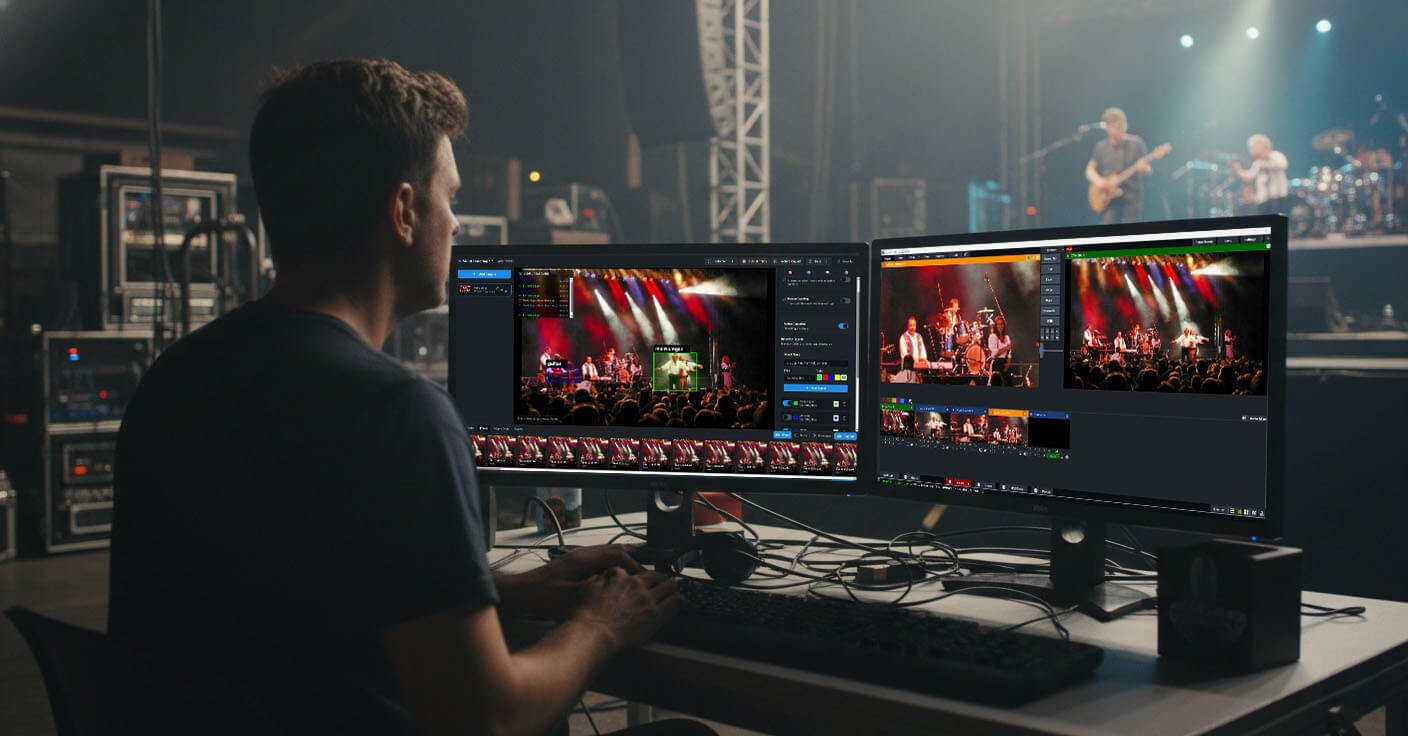
PTZOptics, and LayerJot today announced live demonstrations at InfoComm 2026 showing how prompt-based AI, robotic camera control, and high-performance computing can work together to identify, follow, and respond to objects and events in real time. The demonstrations, which run on Intel Core Ultra Series 3 processors, combine LayerJot’s purpose-built AI software application with PTZOptics’ SimplTrack3 cameras, featuring advanced auto-tracking capabilities. Visitors will be able to see how natural-language prompting can guide the system to identify and/or track objects in the room, then use PTZOptics camera control to respond automatically.
The collaboration is designed to show integrators, educators, broadcasters, and pro AV teams a practical path for building on-site AI video workflows. By pairing PTZOptics camera robotics with Intel Core Ultra Series 3 -powered compute and LayerJot’s agentic AI application layer, the companies are demonstrating how Visual Reasoning can move from concept to deployable workflow without requiring large teams, custom hardware stacks, or cloud-only processing.
“AV and enterprise buyers today are asking the same question: how do we deploy AI that actually works in our environment, without building a data center or waiting on the cloud?” said Dr. Ben Cope, Principal Engineer, Intel. “Intel® Core™ Ultra Series 3 processors were purpose-built with that reality in mind, delivering the on-device AI compute performance that makes local visual reasoning practical at scale. Collaborating with PTZOptics and LayerJot lets buyers take that compute capability and turn it directly into deployable, prompt-driven camera workflows. Together, we’re removing the barriers between AI potential and operational reality.”
For PTZOptics, the demo is part of its broader Visual Reasoning initiative, which focuses on turning video into actionable data by combining camera robotics, AI, and open integration. Visual Reasoning is designed to help systems describe, count, understand, and trigger actions based on what cameras see, supporting workflows across broadcast, pro AV, education, healthcare, manufacturing, houses of worship, and live events.
“Visual Reasoning becomes powerful when integrators and developers can adapt it to the needs of everyday environments,” said Matt Davis, CTO, PTZOptics. “This partnership shows what is possible when robotic cameras, local AI compute, and prompt-driven automation come together. Our goal is to inspire the pro AV community to build customized solutions faster, more affordably, and with more flexibility than ever before.”
LayerJot’s Agentic Visual Application (AVA) connects to the PTZOptics SimplTrack3 camera and uses AI prompting to identify and/or track objects in the space. The demonstration will show how developers can create custom AI workflows that connect directly to camera control, while giving users the freedom to direct camera actions using natural language.
“We’re focused on delivering advanced visual AI solutions that combine scene understanding, automation, and natural-language interaction to support critical workflows in real-world environments,” said Etay Gafni, CEO of LayerJot. “This demonstration shows how scene understanding and natural-language instructions can drive meaningful actions in live operations, enabling users to interact with complex systems in a more intuitive and efficient way.”
Example workflows include prompting the system to identify an object or person in the room, directing the camera to track that target, and showing how similar logic could be adapted for classroom automation, event production, training spaces, and other applications where small teams need consistent video coverage.
The demonstration also reflects a larger shift in the AV industry. Cameras are no longer limited to passive capture. With Visual Reasoning, robotic cameras can become intelligent endpoints that help systems interpret what is happening, make decisions, and trigger workflows in real time. PTZOptics is working with a wide range of partners and integrators to combine their own domain expertise with PTZOptics cameras via open APIs – supporting teams and improving operations across multiple industries.