

LayerJot integration combines visual AI and robotic cameras to reduce waste and improve efficiency in surgical environments
PTZOptics unveiled new Visual Reasoning demonstrations on the opening day of InfoComm 2026
PTZOptics is also demonstrating LayerJot’s Agentic Visual Application (AVA)
Visual Reasoning enables cameras to become intelligent participants in a workflow
LayerJot integration combines visual AI and robotic cameras to reduce waste and improve efficiency in surgical environments
PTZOptics today unveiled new Visual Reasoningdemonstrations at InfoComm 2026 (booth N8227), including the first public demonstration of a healthcare integration with LayerJot and a live showcase of natural language camera automation and real-time scene understanding.
The healthcare demonstration, developed with LayerJot, showcases how AI vision models and camera automation are combining to transform surgical workflows. LayerJot’s computer vision software analyzes instrument utilization and automates checks and reporting, helping healthcare teams improve operational efficiency, reduce waste, and gain visibility into how instruments are actually used.
Without accurate utilization data, healthcare centers can end up sterilizing thousands of unused surgical instruments each year, driving up utility costs and labor requirements. The PTZOptics and LayerJot integration creates a compliant, secure workflow that understands which instruments are on the operating table and how they are being used, generating automated utilization reports that help healthcare teams optimize inventory, improve efficiency, and support clinical readiness.
“This partnership shows what’s possible when visual AI and camera robotics work together,” said Etay Gafni, Founder and CEO of LayerJot. “We’re giving healthcare teams a better understanding of instrument utilization and operational performance through automated analysis and reporting, helping them reduce waste, improve efficiency, and make smarter operational decisions.”
“The new healthcare workflow is exactly what our Visual Reasoning concept was designed to enable,” said Claudia Barbiero, Director of Global Marketing at PTZOptics. “We’re demonstrating real visual AI applications that partners and integrators can deploy, adapt, and build on right now. Healthcare is one example, but the opportunity extends across manufacturing, broadcast, education, live events and many more industries – where intelligent cameras help teams do more with less, automating routine work and enabling faster, more informed decisions.”
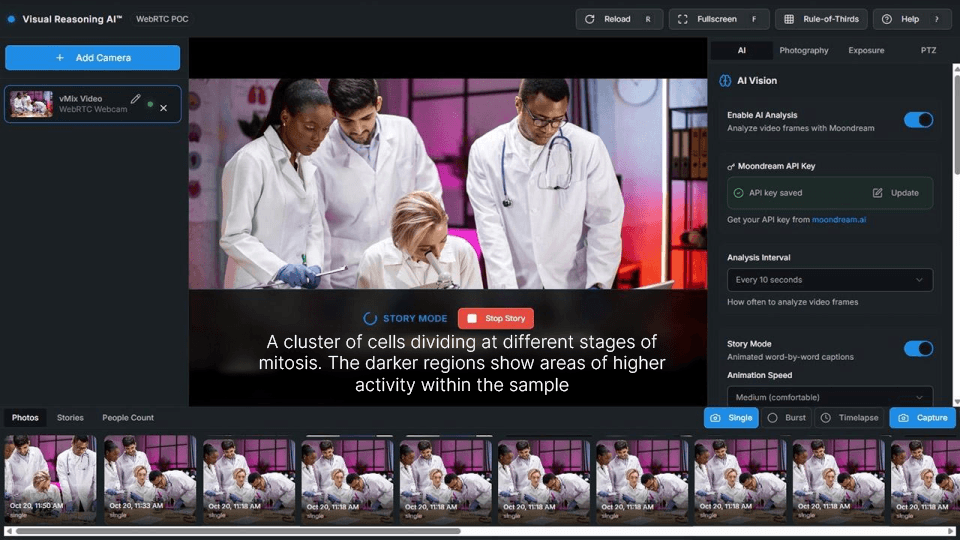
PTZOptics’ Visual Reasoning initiative combines camera robotics and AI to enable cameras to understand what they see and trigger real-time actions. Rather than simply capturing footage, Visual Reasoning enables cameras to become intelligent participants in a workflow, generating insights, supporting decisions, and triggering actions based on what they observe in real time.
PTZOptics is also showcasing LayerJot’s Agentic Visual Application (AVA), which enables users to control PTZ cameras using natural-language prompts. Connected to PTZOptics SimplTrack3 cameras, AVA can identify, follow, and respond to people, objects, and activities within a scene, allowing users to create sophisticated camera workflows without complex programming.
The demonstration highlighted a new generation of camera automation that moves beyond traditional auto-tracking and rule-based workflows. Deploying the system, integrators and developers can use natural-language instructions to create custom video workflows that connect scene understanding directly to camera actions.
Live demonstrations of the LayerJot healthcare integration and AVA workflow are taking place throughout InfoComm 2026 at the PTZOptics booth (N8227).